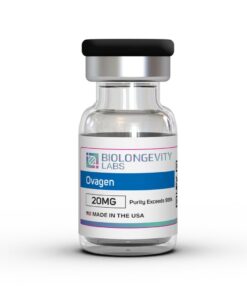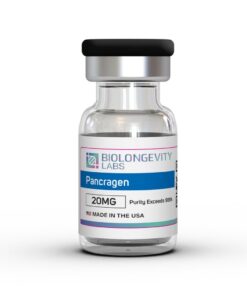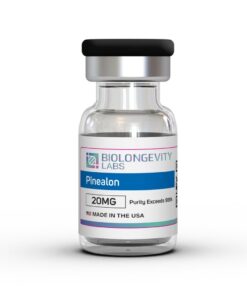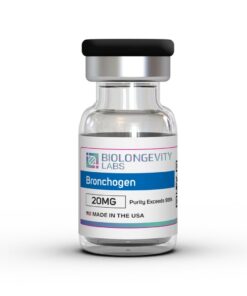
Regeno Blend (BPC-157, TB-500, Cartalax) 30mg For Sale
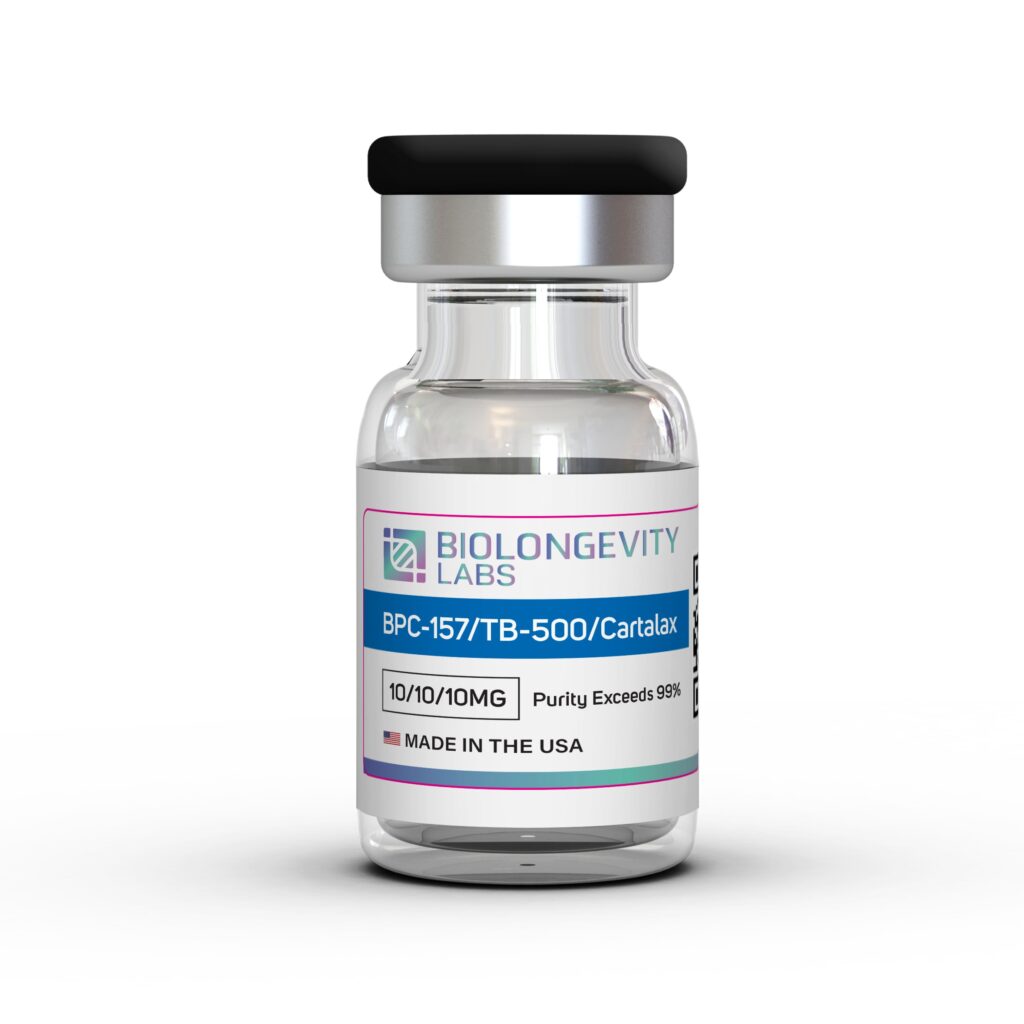
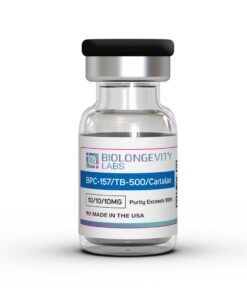
Triple peptide blend combining BPC-157, TB-500, and Cartalax at 10mg each for in vitro connective tissue studies.
Peptide Blend Description
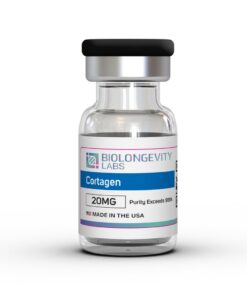
This 30mg research blend delivers three complementary peptides in a single vial: BPC-157, TB-500, and Cartalax. Each component contributes distinct mechanisms for laboratory research. BPC-157 (10mg) targets gastric-derived pathways. TB-500 (10mg) provides the 43-amino acid thymosin beta-4 sequence. Cartalax (10mg) offers the bioregulatory AED tripeptide.
Manufactured in USA facilities under pharmaceutical-grade standards with third-party testing verification. Supplied as sterile lyophilized powder at ≥99% purity. Designed for researchers studying connective tissue mechanisms, cellular repair pathways, and fibroblast activity in controlled laboratory settings. For in vitro research applications only.
Product Specifications
| Specification | BPC-157 | TB-500 (Thymosin Beta-4) | Cartalax (AED) |
|---|---|---|---|
| Sequence | Gly-Glu-Pro-Pro-Pro-Gly-Lys-Pro-Ala-Asp-Asp-Ala-Gly-Leu-Val | Ac-Ser-Asp-Lys-Pro-Asp-Met-Ala-Glu-Ile-Glu-Lys-Phe-Asp-Lys-Ser-Lys-Leu-Lys-Lys-Thr-Glu-Thr-Gln-Glu-Lys-Asn-Pro-Leu-Pro-Ser-Lys-Glu-Thr-Ile-Glu-Gln-Glu-Lys-Gln-Ala-Gly-Glu-Ser | Ala-Glu-Asp |
| Molecular Formula | C62H98N16O22 | C212H350N56O78S | C12H19N3O8 |
| Molecular Weight | 1419.5 g/mol | 4963.4 g/mol | 333.29 g/mol |
| CAS Number | 137525-51-0 | 77591-33-4 | 205640-90-0 |
| PubChem CID | 9941957 | 16132341 | 87815447 |
| Synonyms | Bepecin, Bpc 15, Body protection compound 15, Pentadecapeptide | Thymosin Beta 4, Thymosin β4, TB500, Timbetasin | T-31, AED, Alanyl-glutamyl-aspartic acid |
Product Usage:
This PRODUCT IS INTENDED AS A RESEARCH CHEMICAL ONLY. This designation allows the use of research chemicals strictly for in vitro testing and laboratory experimentation only. This product should only be handled by licensed, qualified professionals. This product is not a drug, food, or cosmetic and may not be misbranded, misused or mislabeled as a drug.
Research Overview
This triple-blend peptide brings together three distinct molecular pathways studied in connective tissue research and cellular repair models.
BPC-157 Research Profile
BPC-157 is a stable gastric pentadecapeptide derived from human gastric juice proteins. Laboratory studies demonstrate its activity across vascular endothelial growth factor pathways and nitric oxide-dependent mechanisms[1][2].
The peptide shows particular activity in musculoskeletal tissue models, where it modulates growth hormone receptor expression in fibroblast cultures. Research documents its influence on ERK1/2 signaling cascades that regulate cell proliferation and migration[3][4].
Studies on wound healing models reveal rapid gene expression changes and angiogenic activity in laboratory settings[1][5]. The peptide demonstrates cytoprotective properties across diverse cell types in vitro[6].
TB-500 Research Profile
TB-500 is a 43-amino acid polypeptide that functions as the primary G-actin sequestering molecule in eukaryotic cells. Its molecular activity extends to actin cytoskeleton regulation and spatial control of polymerization at sites of cell movement[7][8].
Laboratory models show TB-500 activates HIF-1α pathways under hypoxic conditions. The peptide influences cell migration patterns through controlled actin availability at leading cell edges[9][10].
Research demonstrates angiogenic signaling in vascular cell cultures. Studies document progenitor cell differentiation and anti-apoptotic activity in multiple tissue models[11][12][13].
The peptide shows measurable effects in dermal fibroblast migration assays and collagen deposition models[14][15].
Cartalax Research Profile
Cartalax is a tripeptide (Ala-Glu-Asp) belonging to the Khavinson bioregulator family. These short peptides demonstrate direct DNA interaction and nuclear penetration in cell culture models[16].
Research documents epigenetic modulation mechanisms through DNA methylation status changes. The peptide influences gene expression patterns without altering underlying genetic sequences[17][18].
Laboratory studies show tissue-specific activity based on amino acid composition. Cell culture research reveals histone protein interactions that modify chromatin accessibility[19][20].
The peptide demonstrates proliferation marker changes in aging cell models. Research documents senescence-associated gene modulation in fibroblast cultures[16].
Complementary Research Applications
The three peptides operate through distinct molecular pathways in laboratory settings. BPC-157 targets vascular and growth factor systems. TB-500 regulates cytoskeletal dynamics and cell motility. Cartalax modulates gene expression at the chromatin level.
This blend provides researchers with multiple mechanistic entry points for studying connective tissue biology, cellular repair processes, and fibroblast activity in controlled in vitro applications.
For investigational research use only.
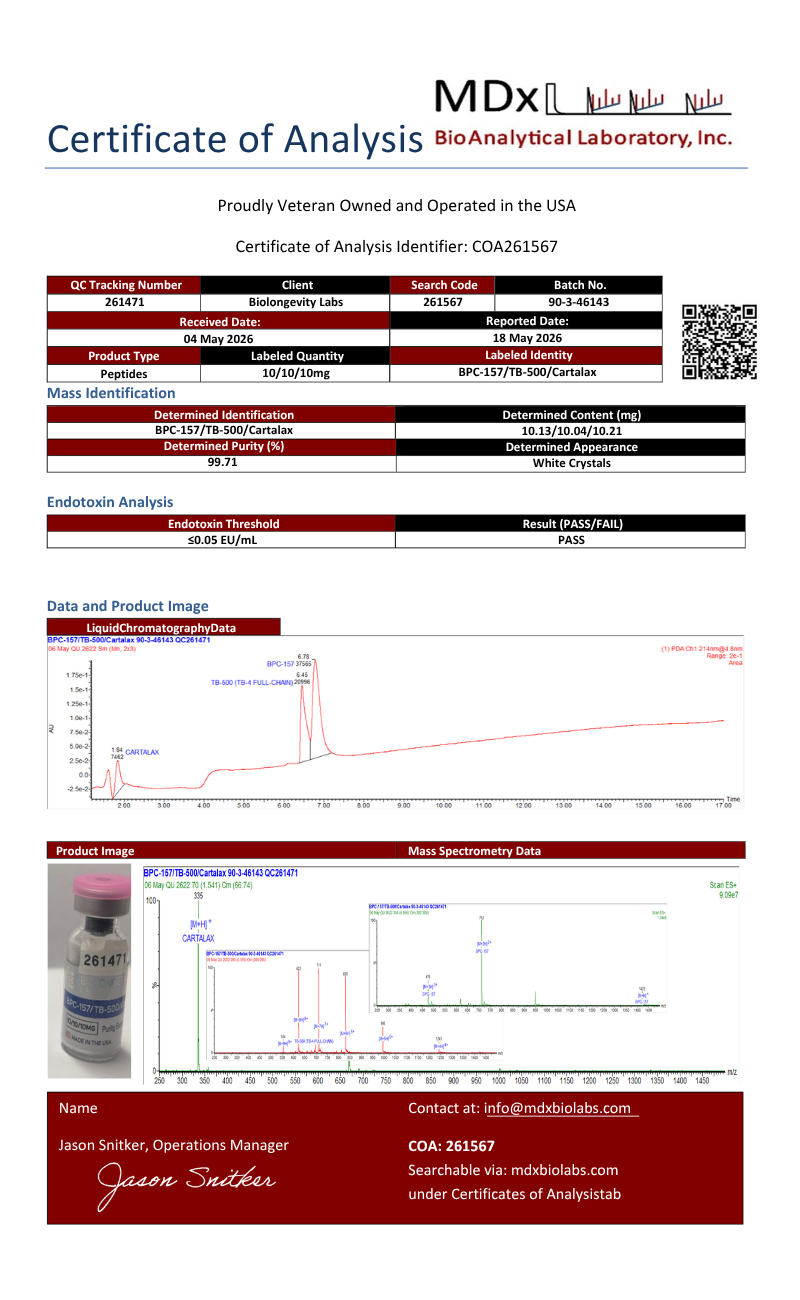
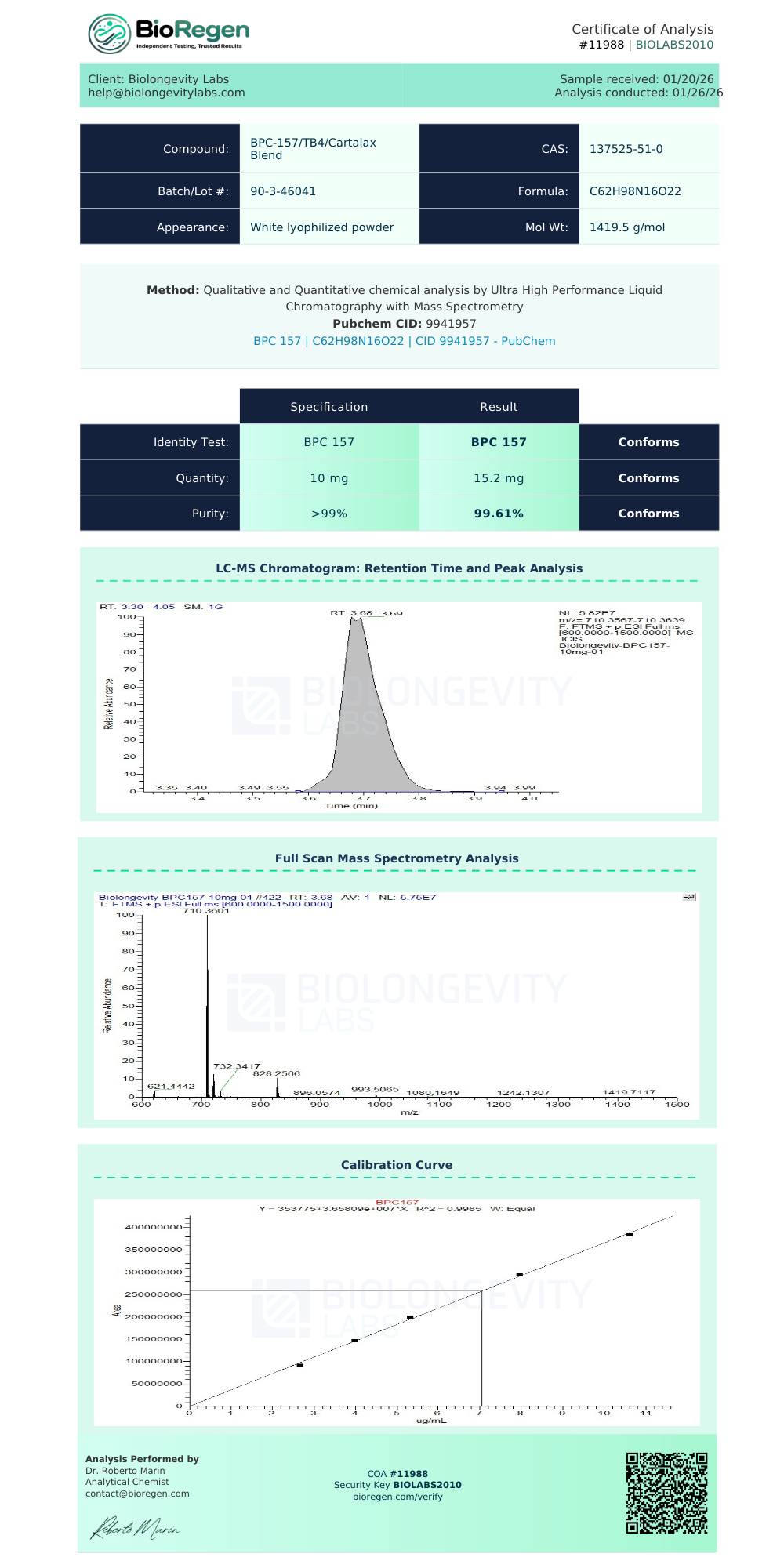
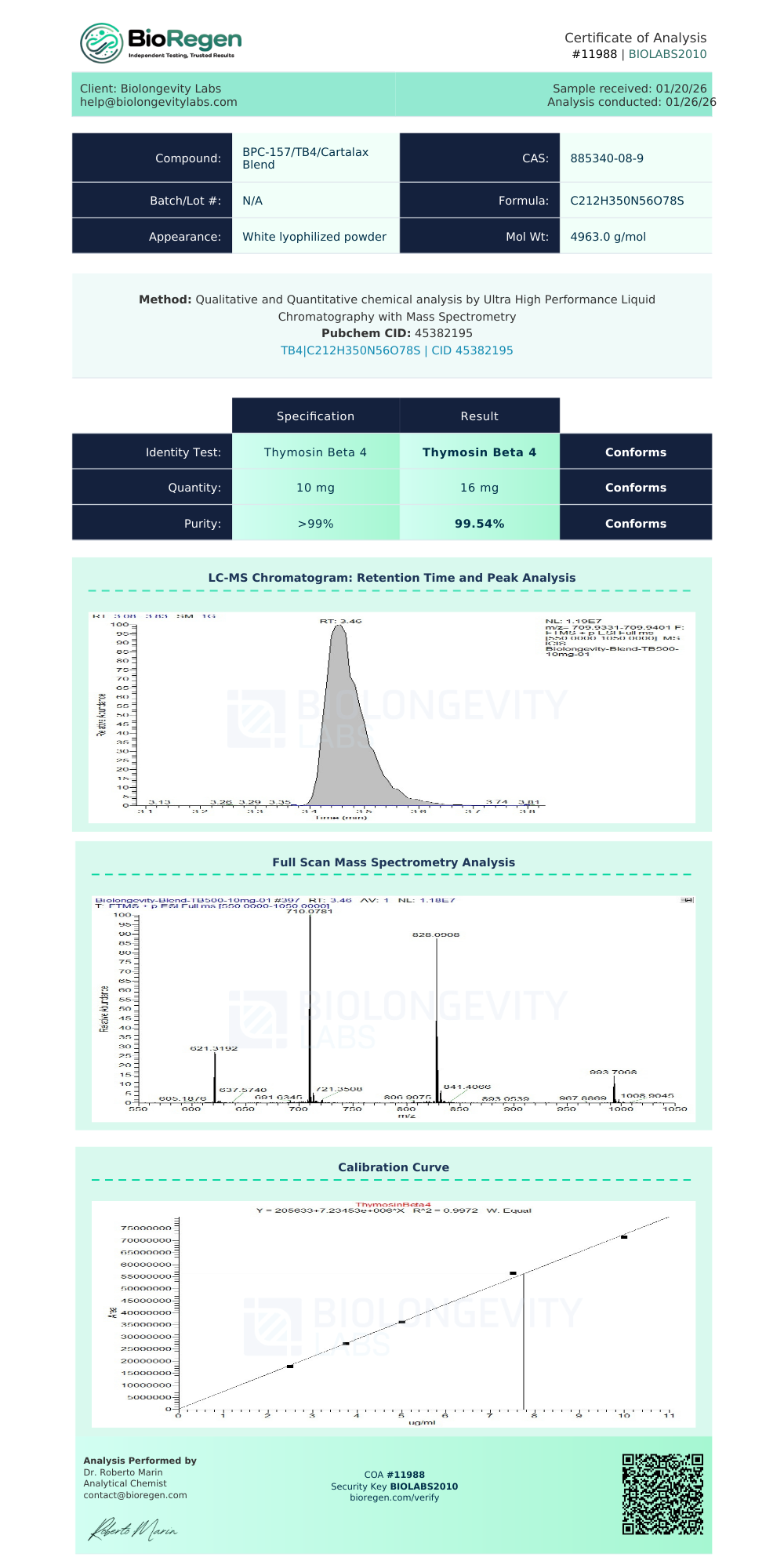
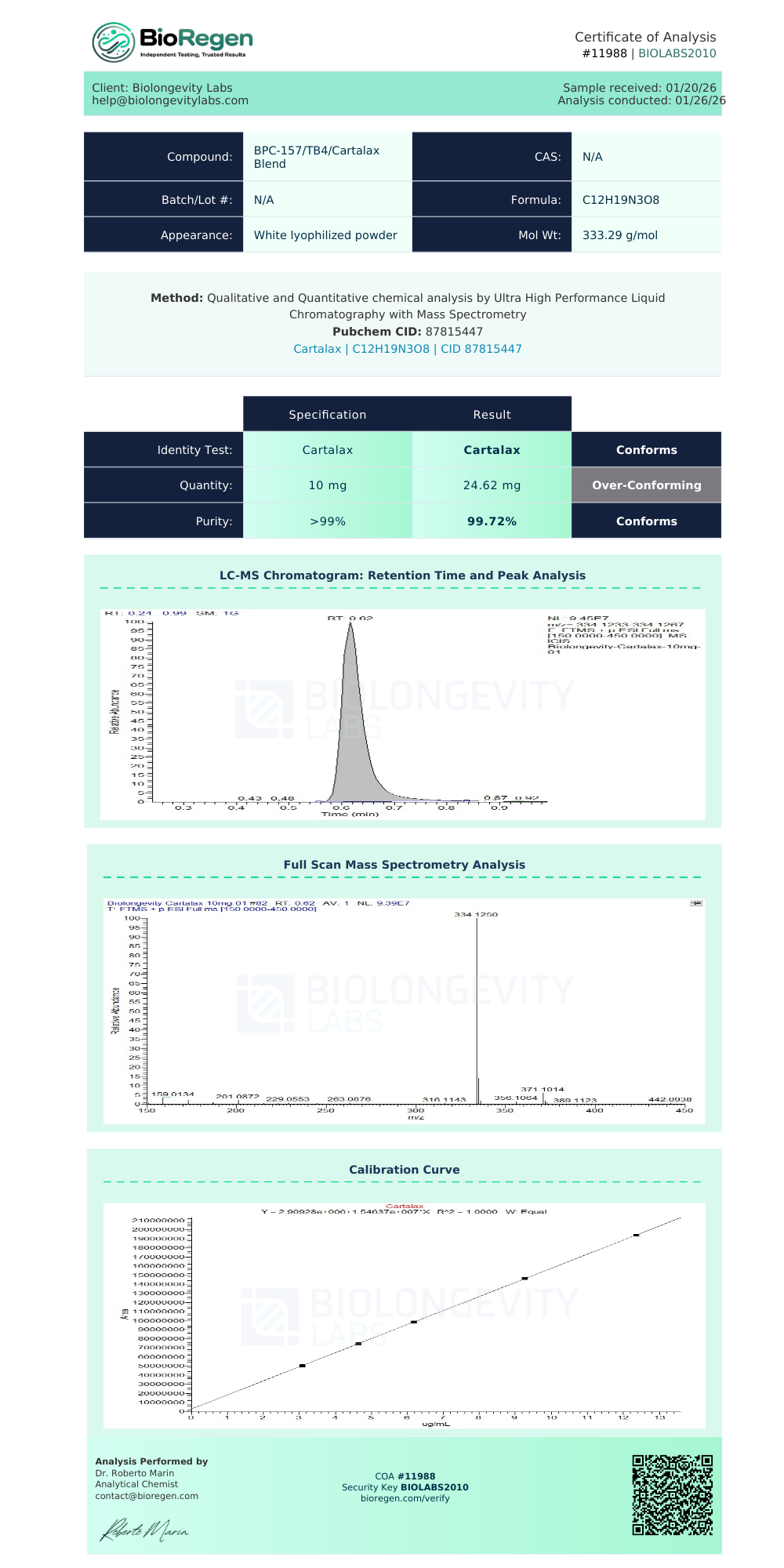
Certificate of Analysis (COA) for Every Batch
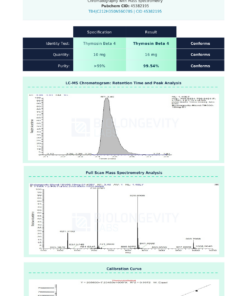
A Certificate of Analysis (COA) is a document that verifies a compound’s identity, purity, and batch quality through independent laboratory testing. Every compound from BioLongevity Labs ships with a COA tied to its specific batch, so researchers can confirm exactly what they received before it enters a protocol.
Each COA reports results from third-party laboratory analysis, including:
- High-performance liquid chromatography (HPLC) for purity, typically confirmed at 99% or higher
- Liquid chromatography mass spectrometry (LC-MS) for molecular identity and mass confirmation
- Sterility and endotoxin screening where applicable
- Chemical contaminant and residual solvent checks
COAs are sourced from independent certified labs rather than in-house testing alone, giving researchers a verifiable record of molecular integrity for each batch. All compounds are supplied for research use only.


Reviews
There are no reviews yet.